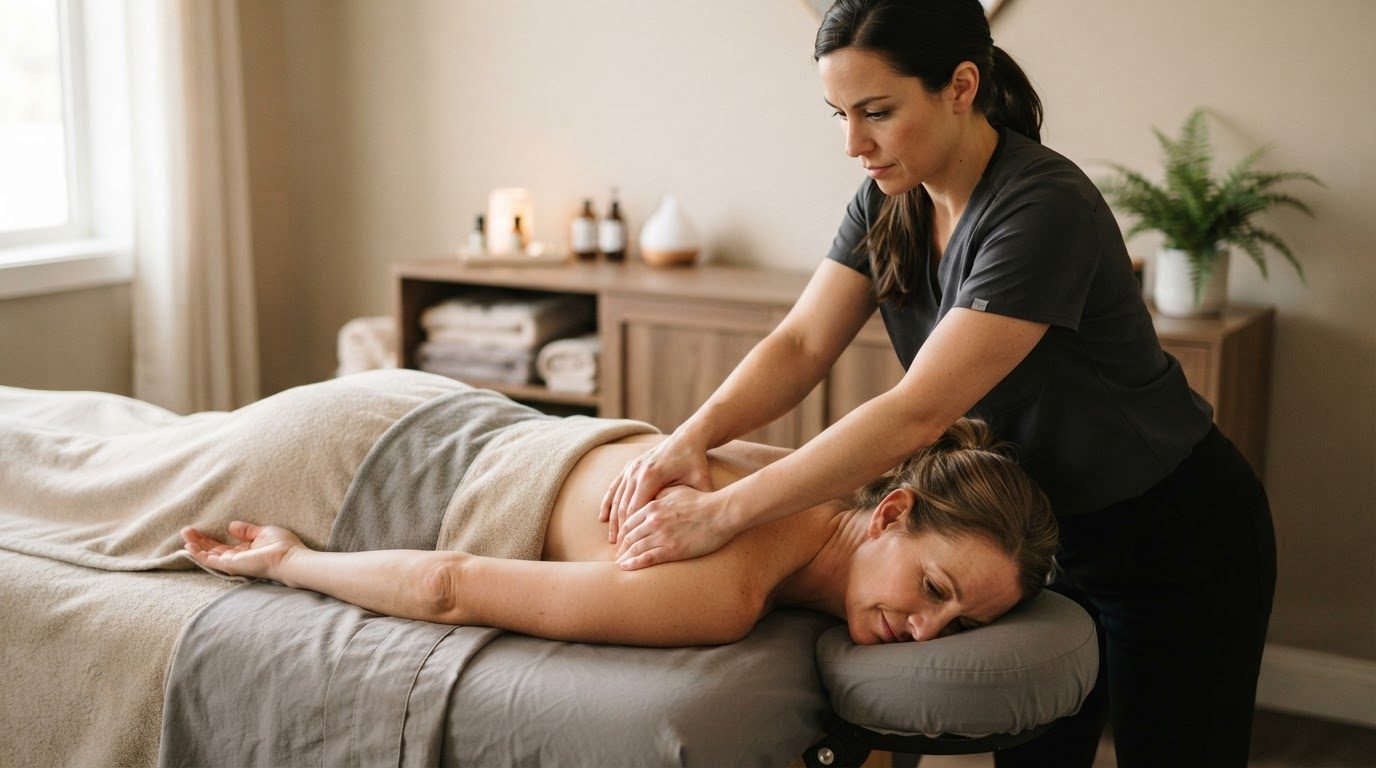
A massage that feels good for an hour is not always the same as care designed to address recurring discomfort. If tight shoulders, low-back soreness, hip stiffness, or limited mobility keep returning, the useful question is not simply whether massage feels relaxing. It is whether the session matches the reason your body is overworking certain muscles in the first place.
Massage therapy involves hands-on manipulation of muscles and other soft tissues. Depending on the approach, it may support relaxation, reduce muscle tension, and provide short-term relief for some types of pain. Results vary, and massage should complement—not replace—appropriate medical evaluation for persistent or serious symptoms.
At True Health Chiropractic and Acupuncture, sessions in Lombard, Illinois, are customized after discussing what you feel, how you move, and what you want to return to doing. Available approaches include deep tissue, sports massage, myofascial release, and prenatal care, with massage incorporated into a broader chiropractic and acupuncture setting.
Why tightness keeps coming back
Muscle tension often reflects more than a single sore spot. Posture, previous injuries, repetitive work, exercise, daily stress, and stiff joints can all alter movement. One group of muscles may begin compensating for another, creating a cycle in which knots form, motion becomes restricted, and discomfort returns after temporary relief.
That does not mean every recurring ache has the same cause. A therapist needs to understand the location, pattern, duration, and triggers of your symptoms before selecting a technique. The goal is not to use the deepest pressure available. It is to apply an approach that fits your tissues, tolerance, and functional goals.
Massage therapy is a form of manual therapy. Swedish or classical massage typically uses flowing strokes and kneading over superficial muscle layers. More focused methods use slower pressure or targeted work around areas of restriction. A session can be relaxing while still addressing a practical concern, such as difficulty turning your neck or recovering after activity.
Choosing an approach based on your concern
The name of a massage style matters less than whether it fits the problem being addressed. Common approaches include:
Deep tissue massage
Deep tissue work uses slower, deliberate pressure to address deeper layers of muscle and connective tissue. It is often selected for persistent patterns of tightness or a localized “trouble spot.” More pressure is not automatically better, however. Vigorous treatment can leave you sore and is not appropriate for everyone.
Sports massage
Sports massage is designed around the demands of physical activity. It may focus on flexibility, recovery, muscle strain, or preparation for exercise. You do not need to be a professional athlete to discuss sports-oriented care; recreational training and physically demanding work can also create repetitive strain.
Myofascial release
Fascia is connective tissue that surrounds and supports muscles and other structures. Myofascial techniques use sustained or gentle pressure to address areas that feel restricted. The therapist may adapt the work according to how your body responds rather than following a fixed routine.
Prenatal massage
Pregnancy changes posture, balance, and the demands placed on joints and muscles. Prenatal massage uses positioning and techniques intended to improve comfort during pregnancy. Tell the therapist how far along you are and discuss massage with your prenatal care professional, particularly if your pregnancy is considered high risk or you have complications.
Relaxation-focused massage
A lighter, flowing session can be appropriate when the primary goal is stress reduction and general relaxation. Reducing stress may also help people who hold tension in the jaw, neck, or shoulders. If pain, numbness, weakness, or an injury is the main concern, describe that before treatment so the session is not treated as a generic spa service.
What a session should involve
A responsible appointment begins with a conversation. Expect questions about:
- Where you feel discomfort and when it began.
- Activities or positions that worsen or relieve it.
- Previous injuries, surgeries, medical conditions, and current treatment.
- Your goals, such as sleeping more comfortably, moving with less restriction, or returning to exercise.
- Pressure preferences and areas you do not want treated.
At True Health, the stated approach is to examine how the body moves, identify where strain begins, and choose techniques according to the client’s goals. A session may focus on one region rather than covering the entire body. Communication should continue throughout treatment: pressure should be adjusted if it feels sharp, excessive, or otherwise wrong.
Most sessions at the practice run about 60 minutes, although timing may be adjusted for a specific injury or focused treatment. The recommended frequency depends on the situation. The practice notes that weekly visits are common initially for acute pain or injuries, while maintenance appointments every 2 to 4 weeks work well for many people. That is a general scheduling framework, not a prescription; your therapist should base recommendations on your response and objectives.
Afterward, drink water as usual, notice how your movement feels, and avoid treating significant pain as proof that the massage worked. Mild tenderness can occur, especially after stronger techniques, but worsening or unusual symptoms deserve attention.
What massage therapy can realistically do
Evidence is not equally strong for every condition or technique. Massage may provide short-term relief for neck or shoulder pain, and small studies suggest possible short-term benefit for knee osteoarthritis pain. Research on low-back pain has found only weak evidence overall, while headache studies have produced inconsistent results. Massage may also help some fibromyalgia symptoms when continued over time.
These findings support a measured view of treatment. Massage can be useful for comfort, relaxation, mobility work, and recovery, but it is not a universal cure and does not correct every underlying condition. At a chiropractic clinic, massage may be coordinated with other care when joint mobility, movement patterns, or rehabilitation goals are part of the concern.
True Health describes its massage service as part of a broader plan rather than a standalone rubdown. Patients may seek care for hip stiffness, rotator cuff irritation, posture-related discomfort, or restricted movement. Those descriptions explain the practice’s focus; they do not guarantee a particular outcome for every patient.
Safety: when massage needs modification or medical clearance
The overall risk of massage appears low, but rare serious complications have been reported, including blood clots, nerve injury, and bone fracture. Vigorous techniques and people with increased vulnerability, including some older adults, require particular caution.
Tell the therapist about relevant health information before treatment. Postpone massage and seek medical guidance for unexplained severe pain, a suspected fracture, acute injury, sudden swelling, new weakness, or symptoms that could indicate a clot or neurological problem. Massage is not a substitute for urgent care.
Professional advice is also appropriate if you have:
- A bleeding disorder or take blood-thinning medication.
- Osteoporosis or a condition that weakens bones.
- A history of blood clots or significant circulation problems.
- Cancer, recent surgery, an active infection, or an inflammatory flare.
- A high-risk pregnancy or another condition requiring treatment precautions.
Massage over an area that is hot, acutely swollen, infected, or recently injured may be inappropriate. A qualified therapist should explain modifications or recommend medical assessment instead. You should always be able to stop treatment.
How a chiropractic-clinic setting differs from a spa
A spa massage commonly emphasizes relaxation and the overall experience. A clinical setting may place more emphasis on function, symptom patterns, movement, and coordination with other care. Neither setting is automatically right for everyone; the best choice depends on your goal.
At True Health, the practice says massage therapists work alongside chiropractors and acupuncturists, focusing on muscle function, joint mobility, and recovery. That model may suit someone who wants massage connected to a plan for recurring discomfort or activity-related limitations. It is still appropriate to ask who will provide the service, what assessment is included, which techniques are planned, and how progress will be evaluated.
In the United States, massage-therapy regulation varies by state. Many states require licensure or certification, and consumers should verify that a practitioner is authorized to practice where they live. You can also ask about training, experience with your condition, sanitation procedures, draping, and communication standards.
Questions worth asking before booking
A short consultation can prevent a mismatched appointment. Ask:
- Which technique fits my goals and symptoms?
- Will the session be adapted if I am sore or sensitive?
- What should I avoid before and after treatment?
- How will you coordinate care if I am seeing a chiropractor, physician, or physical therapist?
- What would make you refer me for medical evaluation?
At True Health, the first conversation is intended to cover what you are feeling, what your day-to-day activities involve, and what you want to resume. That information helps distinguish a relaxation session from focused work for an injury, movement limitation, or recurring tension.
The strongest reason to schedule massage therapy is a clear, realistic objective: easing muscle tension, supporting recovery, improving comfort during movement, or making time for relaxation. If symptoms are persistent, progressively worsening, or accompanied by neurological or systemic signs, get an appropriate medical assessment before relying on massage alone.
