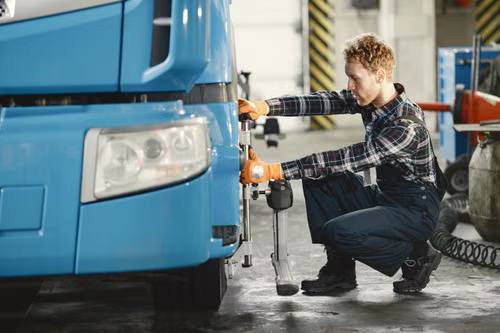
A warning light comes on outside Council Bluffs, and the next thirty seconds of thinking can cost more than the repair itself. Every driver searching for semi truck repair near me from the shoulder faces the same question. Can the truck make it to the shop under its own power, or does moving it destroy something expensive? Guess wrong in one direction and a small fault becomes an engine replacement. Guess wrong in the other and a tow bill gets paid for nothing.
Truthfully, most drivers already know the answer in their gut and want permission to act on it. This guide gives that permission some structure. Before typing semi truck repair near me and picking the closest result, run the symptom through the checks below and let the truck itself make the call.
The good news for local operators is that the decision gets easier when the shop sits close. MSR Manufacturing & Truck Sales works out of Crescent, Iowa, about five minutes from Omaha and Council Bluffs, which turns many borderline situations into a short, careful trip instead of a gamble across half the metro. Distance changes everything in this decision, and more on that below.
Three Questions That Decide Whether You Tow or Drive
Start here. First, is the truck safe to operate at all? Brakes, steering, and anything leaking onto hot components settle the matter on their own. Second, will running the engine make the damage worse? Some faults stay stable for fifty miles, and others multiply by the minute. Third, what does the math say? Weigh the cost of a tow against the cost of the repair growing while the wheels turn. A tow feels expensive right up until the moment it becomes the cheapest line on the invoice.
Symptoms That Mean Shut It Down and Call a Tow
Certain warnings leave no room for debate. Shut the engine off and arrange a tow when you see any of these:
- Oil pressure dropping or the low-pressure warning staying lit.
- Coolant temperature climbing fast or steam coming from under the hood.
- Loud knocking or metal-on-metal noise from the engine
- Air pressure loss in the brake system
- Fuel or oil visibly leaking onto the ground or exhaust.
- White smoke pouring from the exhaust in heavy clouds
Here is why the tow wins every time in these cases. An engine running without oil pressure or proper cooling can destroy itself in minutes. The bearing that needed a repair becomes a crankshaft that needs a machine shop, and the bill grows to zero. No delivery window justifies that trade.
Problems That Usually Allow a Careful Drive to the Repair Shop
Plenty of faults announce themselves without demanding an immediate shutdown. A steady check engine light with normal gauges usually permits a slow, careful trip. So does a mild injector miss, a belt squeal, hard starting that clears once the engine warms, or a DPF asking for a regen. The word careful carries weight here. Keep the speed down, watch the temperature gauge as it owes you money, and pull over the moment anything changes.
One habit separates experienced drivers from nervous ones. They check the gauges every minute or two on the way in. A stable gauge is a promise. A moving one is a warning.
The Grey Zone: What Derate Mode Really Tells You
Derate mode confuses more drivers than any other condition. The engine computer cuts power to protect itself, often over an emissions fault, a sensor reading, or a DEF issue. The truck still runs, just slowly, and that tempts people into long limps home. Short answer: a derated truck can usually cover a short local distance with stable gauges, but a 200-mile run in derate invites a second fault on top of the first. Sensor problems causing derate conditions are a routine diagnosis at the shop level. Let the computer’s caution be your caution.
Why Being Near Omaha Changes the Semi Truck Repair Math
Distance is the quiet variable in every tow-or-drive call. A symptom that forbids a two-hour haul often tolerates a ten-minute one. Operators around Omaha, Council Bluffs, Bellevue, Papillion, La Vista, Gretna, and Carter Lake fall within that ten-minute window from the MSR shop, which reduces the risk on borderline calls. The same logic works in reverse. The farther the shop, the more the tow deserves the benefit of the doubt. A driver in Gretna and a driver in Grand Island can face the same warning light and correctly make opposite choices.
Call the Repair Shop Before the Truck Moves Anywhere
One step beats every rule in this guide. Call the shop and describe the symptom before deciding. A shop that diagnoses trucks all day can often tell you over the phone whether the fault tolerates a drive, and that two-minute conversation has saved more engines than any dashboard light. Call or text MSR at (402) 810-5057 and describe what the truck is doing. The shop works on Cummins, Power Stroke, Duramax, CAT, Detroit Diesel, and International engines, checks the fault, and gives a quote before any work starts. You approve the repair, then the wrenches move.
There is a quieter lesson hiding in all of this. Most tow-or-drive emergencies started weeks earlier as a small symptom somebody ignored. The hard start that got worse. The coolant level that kept dropping a little. Scheduled maintenance and early inspection catch these faults while they are still cheap, and the drivers who bring trucks in at the first odd noise rarely end up on the shoulder doing math. The tow-or-drive question is worth learning. Never needing to ask it is better.
