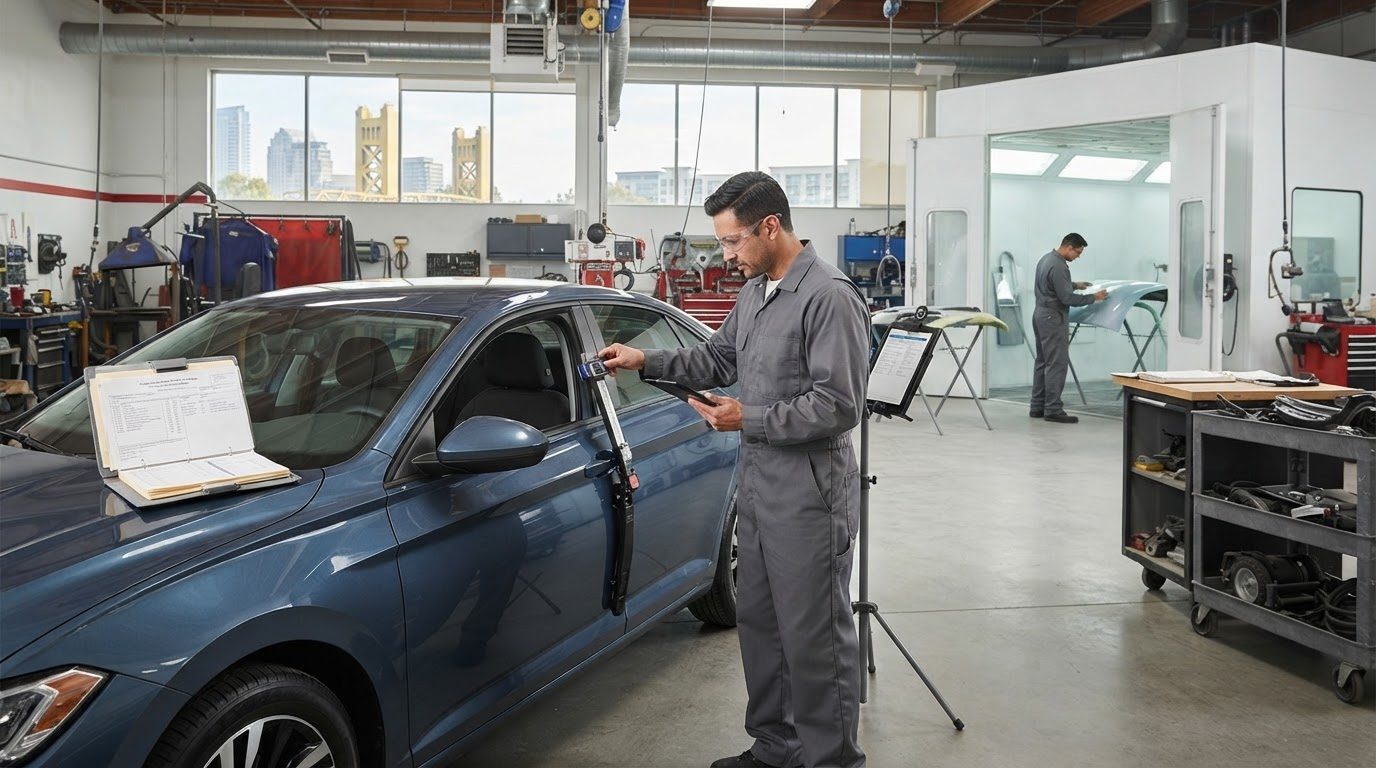
A collision in Sacramento can turn a routine drive into a safety, insurance, and transportation problem within minutes. The visible dent is only part of the story: impact energy may affect the frame, suspension, sensors, restraints, or mechanical systems behind apparently minor damage.
People researching “relux collision” may be trying to understand a local collision-repair option, compare estimate processes, or determine what questions to ask after an accident. The phrase itself is best treated as a search starting point, while the quality of any repair decision depends on documented procedures, transparent communication, and verifiable safety checks.
A sound repair path begins at the crash scene and continues through teardown, structural measurement, refinishing, diagnostic scanning, and final inspection. The following guide explains what Sacramento drivers should expect and how to assess a repair plan without relying solely on an insurer’s initial estimate.
What to Do Immediately After a Collision
First, check for injuries and call 911 when medical assistance or emergency response is needed. Move the vehicle out of active traffic only if it is safe and operable. Turn on hazard lights, use warning devices if available, and avoid standing between vehicles or in an exposed lane.
Document the scene with photographs and notes:
- Capture all vehicles, damage angles, license plates, road conditions, signs, and debris.
- Exchange names, contact information, driver’s-license details, insurance information, and vehicle identification numbers.
- Record witness contact information and obtain the responding officer’s report number when applicable.
Do not drive a vehicle with leaking fluids, a damaged wheel or tire, deployed airbags, severe steering or braking problems, a crushed suspension component, loose body parts, or warning lights indicating critical system faults. A tow is usually safer when the hood, trunk, doors, windshield, lights, or bumper cannot close or function properly.
Notify your insurer promptly, but remember that an insurance carrier’s preferred network does not eliminate your ability to investigate repair options. Ask how the claim will be documented, whether a rental vehicle is covered, and what information the adjuster needs. California drivers should also consider local traffic exposure, summer heat, and rain-related visibility when deciding whether a damaged car can be moved safely.
How a Collision Repair Estimate Becomes a Repair Plan
An initial visual estimate is not the same as a complete damage assessment. The first inspection may identify a damaged bumper, fender, grille, or lamp, but teardown can reveal crushed reinforcements, bent rails, broken brackets, wiring faults, suspension damage, or compromised crash sensors.
A professional assessment typically involves:
- Photographing and measuring the vehicle before disassembly.
- Scanning electronic control modules for diagnostic trouble codes.
- Removing selected parts to inspect hidden damage.
- Measuring structural points against manufacturer dimensions when frame or unibody damage is suspected.
- Checking steering, suspension, wheel alignment, cooling, exhaust, and restraint systems.
The resulting estimate should separate parts, labor, refinishing, materials, diagnostic scans, ADAS calibration, structural work, sublet services, and taxes or fees. It should also identify whether parts are new, used, aftermarket, remanufactured, or manufacturer-approved. Costs vary widely: a cosmetic bumper repair may run roughly $500 to $1,500, while multi-panel or structural repairs can reach $5,000 to $15,000 or more. Luxury vehicles, aluminum or composite panels, sensors, and specialized paint can increase both cost and cycle time.
Ask:
- Which manufacturer repair procedures apply?
- Will the shop repair or replace each damaged part, and why?
- Could teardown create a supplemental estimate?
- Are pre- and post-repair scans included?
- Which ADAS systems may require static or dynamic calibration?
- What parts and labor warranties apply?
Estimate requests can be submitted to Relux Collision through its website, and the site states that towing can be arranged based on the vehicle’s situation and information provided.
What Quality Repairs Involve Beyond Bodywork
A complete repair follows a controlled sequence:
- Assessment and teardown: Technicians document damage and expose affected components.
- Structural correction: A computerized measuring system, frame rack, or pulling equipment may be used to restore unibody or frame dimensions.
- Panel repair or replacement: Panels are repaired only when the material and manufacturer procedure permit it.
- Refinishing: Proper preparation, color matching, blending, clear coat application, curing, and dust control determine the final appearance.
- Reassembly: Clips, moldings, lamps, seals, wiring, sensors, and trim must be correctly positioned.
- Final inspection: The vehicle is road-tested and checked electronically and visually.
Panel gaps should be even, doors should latch without excessive force, and the hood and trunk should align with adjacent panels. Paint blending matters because a technically correct color can still look mismatched if it is not blended into neighboring panels. Corrosion protection, seam sealer, cavity wax, drainage paths, weatherstrips, and glass bonding are equally important for long-term durability.
A cosmetic repair restores appearance; a structural repair restores crash-energy management and occupant protection. Those are not interchangeable objectives. A shop serving standard, luxury, and major vehicle brands should be able to explain where procedures differ rather than presenting every repair as identical.
I-CAR Gold Class recognition and OEM-certified technicians are useful indicators of formal training, manufacturer information access, and equipment investment. They are not substitutes for a written repair plan, but they can help customers evaluate whether a facility is prepared for modern vehicle construction, aluminum, high-strength steel, electronics, and ADAS.
Insurance Claims, Deductibles, and Customer Responsibilities
A collision facility may communicate with major insurers, provide photographs and estimates, organize supplements, and help assemble claim paperwork. That assistance can reduce administrative delays, but the owner remains responsible for understanding coverage, approving work, paying the deductible, and confirming rental-vehicle terms.
Before authorization, gather:
- Claim number and adjuster contact details.
- Policy information and coverage limits.
- Police report or incident number.
- Photos, vehicle registration, and loan or lease information.
- Rental-car requirements and transportation limitations.
Ask whether the estimate is preliminary, whether supplements require separate approval, and whether storage, towing, teardown, or diagnostic charges are covered. Relux Collision advertises deductible assistance of up to $1,000 and a discount of up to 10%; eligibility, exclusions, insurer restrictions, and expiration terms should be confirmed in writing before authorizing work. Promotional assistance should never be assumed to replace a contractual insurance obligation.
You may also ask who pays for non-covered procedures, how parts disputes are handled, and what happens if the vehicle is determined to be a total loss after disassembly.
How to Verify the Vehicle Before Taking It Home
Inspect the vehicle in good lighting before signing the final repair order:
- Compare paint color, gloss, texture, blend edges, and clear-coat consistency.
- Check panel gaps, body lines, bumper fit, lamps, glass, wheels, tires, doors, hood, trunk, and interior trim.
- Confirm that warning lights are off and that airbags, seatbelts, mirrors, cameras, and parking sensors operate normally.
Request the final invoice, repair summary, parts information, warranty terms, and any unresolved-item list. Also ask for pre- and post-repair diagnostic scan reports. A scan can identify faults in airbag, restraint, powertrain, network, and driver-assistance modules that a dashboard inspection may miss.
ADAS calibration may be necessary after bumper replacement, windshield replacement, suspension or alignment work, structural correction, or camera and radar disturbance. Depending on the vehicle, this may involve a factory scan tool, calibration targets, wheel-alignment equipment, or a controlled road test. Documentation should identify the systems calibrated and the procedure used.
Take a careful test drive where permitted. Check:
- Steering-wheel centering, tracking, alignment, and braking response.
- Suspension noise, vibration, pulling, tire contact, and ride quality.
- Wind noise, door sealing, water leaks, and trunk or hatch operation.
During the first week, monitor warning lights, fluid leaks, unusual handling, battery issues, and unexpected behavior from lane-keeping, adaptive cruise, blind-spot monitoring, or parking systems. Report concerns promptly rather than waiting for the warranty period to become complicated.
Questions to Ask Before Signing the Final Repair Order
- Which damage was discovered after teardown?
- Were parts repaired or replaced, and what determined that choice?
- Were OEM or manufacturer-approved procedures followed?
- Which components are aftermarket, recycled, or remanufactured?
- What inspections, scans, wheel alignments, and ADAS calibrations were completed?
- What does the lifetime repair warranty cover, and what exclusions apply?
- Who should be contacted if a problem appears after delivery?
A repair decision should ultimately be based on evidence: accurate measurements, documented procedures, qualified technicians, clear costs, and a verifiable final inspection. That approach protects both the vehicle’s appearance and the safety systems designed to protect its occupants.
