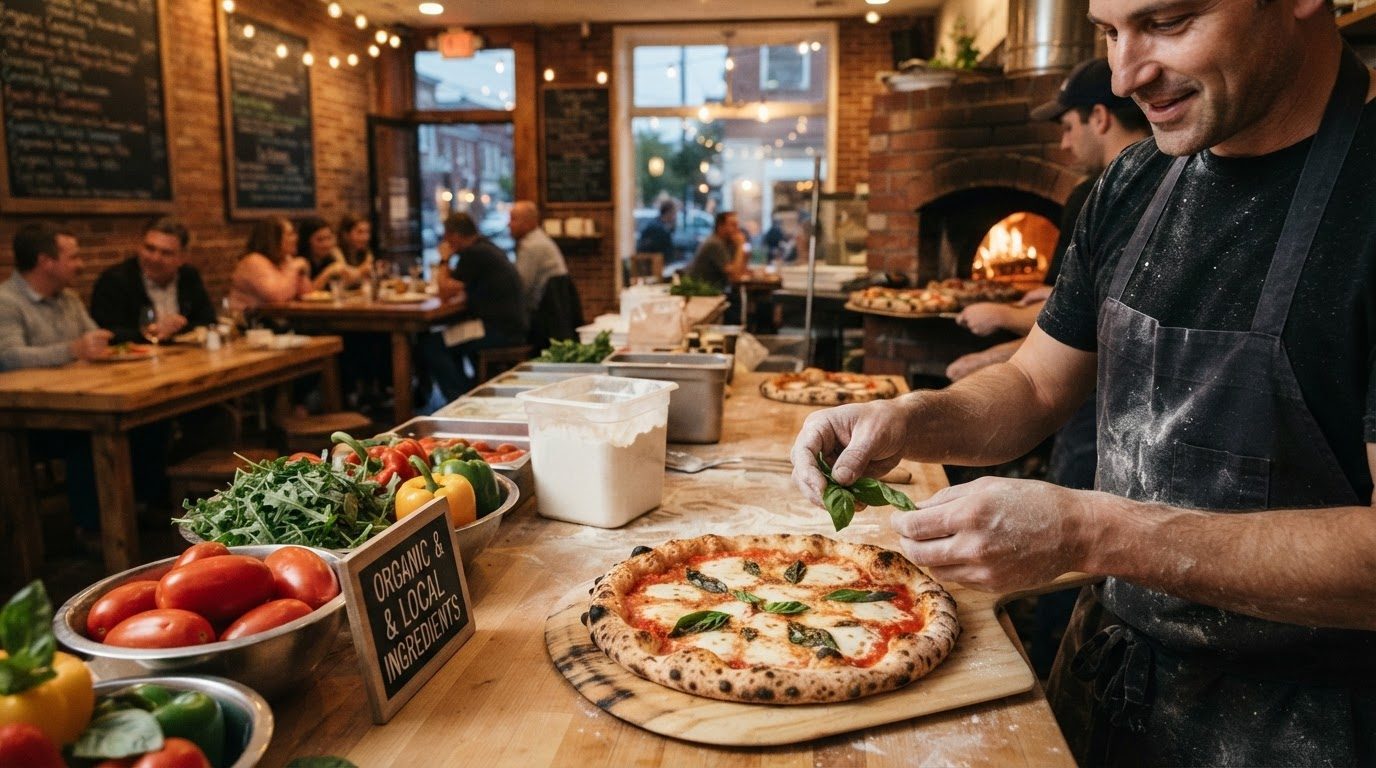
A memorable organic pizza starts long before the oven: with how the flour was grown, how the dough was fermented, and whether the toppings are fresh enough to stand on their own. In Conshohocken, diners have plenty of reasons to look beyond a label and examine what is actually being sourced and prepared.
The phrase organic pizza restaurant can describe several different models, from a pizzeria using organic vegetables to a kitchen that builds its dough and sauces around certified-organic ingredients. Understanding that distinction helps customers compare restaurants without mistaking one organic component for an entirely organic menu.
For local diners, The Tomato Shack salad & pizza co, Conshohocken offers a useful example of why ingredient-specific questions matter. Its published information states that the house-made pizza dough, also used for garlic knots and breadsticks, is made entirely with organic ingredients. That is a precise sourcing claim—but it does not automatically mean every topping, cheese, or finished pizza is organic.
What “Organic” Means on a Pizza Menu
“Organic pizza” is not always a standardized restaurant category. It may mean:
- The dough is made with organic flour and other organic ingredients.
- The tomato sauce and selected vegetables are organic.
- Most major components—flour, tomatoes, produce, cheese, and meats—come from certified-organic suppliers.
- The restaurant is fully organic, with sourcing policies that apply across the menu.
The distinction matters because organic certification applies to specific agricultural products and production practices, not to the overall concept of pizza. In the United States, the U.S. Department of Agriculture regulates organic labeling. A restaurant may accurately identify particular ingredients as organic while using conventional products elsewhere.
Ask which components carry the organic designation:
- Flour and other grains.
- Tomatoes, onions, peppers, mushrooms, and herbs.
- Cheese and other dairy products.
- Meat toppings such as sausage, pepperoni, or chicken.
- Sauces, oils, and seasoning blends.
“Organic” also should not be presented as a blanket health guarantee. A pizza can contain organic ingredients and still be high in sodium, saturated fat, or calories. The strongest restaurants offer transparent ingredient information rather than unsupported claims about detoxification, superior digestion, or overall wellness.
Start With the Dough
Dough is the structural and sensory foundation of pizza. Organic flour can be an important sourcing choice, but it is only one part of the result. Milling, protein content, hydration, fermentation, shaping, and baking determine whether the crust is crisp, chewy, airy, dense, or tender.
A well-managed dough program typically controls:
- Hydration: The ratio of water to flour affects extensibility, crumb openness, and crispness.
- Fermentation: Time and temperature influence flavor, aroma, gluten development, and handling.
- Resting: Longer cold fermentation can improve complexity and make dough easier to stretch, though it requires careful scheduling.
- Oven temperature: High heat promotes oven spring and browning; lower temperatures may suit thicker or heavily topped pizzas.
The same dough may appear in garlic knots or breadsticks, so those items can reveal whether a restaurant consistently handles its dough well. Look for a crust that is baked through without being dry, with a bottom that supports the toppings instead of collapsing under moisture.
Organic flour is not synonymous with whole-grain flour, sourdough, gluten-free dough, or vegan dough. These are separate attributes. A pizza may use organic wheat flour but still contain gluten. A gluten-free crust may not be organic. A vegan pizza may use conventional ingredients, and a sourdough process does not by itself establish organic sourcing.
Guests concerned about celiac disease should ask about dedicated equipment and cross-contact procedures, not merely whether a gluten-free crust is available. Shared mixers, peels, ovens, and prep surfaces can create exposure risks.
Toppings That Make Organic Pizza Worth Ordering
Ingredient quality is easiest to notice when the pizza is not overloaded. A simple Margherita-style combination—tomato, mozzarella, basil, olive oil, and dough—puts acidity, dairy, herbs, and bake quality in direct focus. If the sauce is watery, the cheese burns, or the crust is underbaked, premium sourcing cannot compensate.
Fresh vegetables are particularly important because pizza heat concentrates flavor. Good toppings should be cut consistently and cooked enough to soften without releasing excessive water. Mushrooms, peppers, onions, greens, and seasonal squash can provide sweetness, earthiness, and texture when balanced against the sauce and cheese.
House-made sauces also deserve attention. Ask whether the kitchen prepares tomato sauce in-house, whether pesto contains nuts, and whether sauces include dairy, animal products, or common allergens. Herbs and finishing oils should add contrast rather than obscure the main ingredients.
Organic pizza is not automatically vegetarian or vegan. A plant-forward order might include:
- Roasted vegetables with herbs and a lighter cheese portion.
- A vegetable pizza without meat, while confirming that the sauce and cheese meet dietary requirements.
- Dairy-free cheese or an olive-oil-based preparation, if available.
- A vegan pizza with mushrooms, peppers, onions, greens, and house-made sauce.
Meat sourcing requires the same specificity as produce sourcing. “Natural,” “local,” “hormone-free,” and “organic” are not interchangeable terms. Ask whether sausage or pepperoni is certified organic, locally produced, or simply made in-house from conventional ingredients.
For allergies, tell the staff the severity of the restriction and ask how substitutions are handled. A dairy-free cheese may be available, but the kitchen may still use shared utensils or surfaces. Nut-containing pesto, wheat-based sauces, and processed meats with hidden milk or soy are practical concerns.
Finding the Right Pizza Experience in Conshohocken
The best choice depends on how the pizza will be eaten. Dine-in service allows customers to enjoy a crust at its intended texture, while takeout and delivery require packaging that manages steam. A crisp pizza can soften during a short drive, particularly in humid summer weather, so reheating instructions and vented boxes matter.
Compare restaurants on execution as well as sourcing:
- Crust style: Thin, New York-style, Neapolitan, pan, or another format changes portion size and reheating performance.
- Customization: Useful for allergies, plant-forward diets, and customers who want to emphasize vegetables.
- Portion and value: A specialty pie may cost roughly $15–$30 in the Conshohocken area, depending on size, cheese, meat, and premium toppings. Delivery fees and gratuity add to the effective cost.
- Wait times: Dough fermentation and made-to-order toppings can improve quality but may extend preparation during peak dinner periods.
- Group ordering: Confirm whether pizzas can be split, whether salads and bread items travel well, and how far delivery extends.
- Reheating: A skillet or hot oven usually restores crust texture better than a microwave, which can make bread chewy.
Conshohocken’s walkable restaurant districts, commuter traffic, and seasonal weather make ordering logistics relevant. A restaurant that performs well for dine-in may need different packaging for delivery. Check the current menu for organic ingredient statements, seasonal substitutions, dietary notes, and ordering policies before relying on older reviews or assumptions.
Ultimately, a strong ingredient list still needs balanced sauce, properly cooked toppings, appropriate cheese coverage, and a well-baked crust. Organic sourcing is meaningful when it is specific, verifiable, and paired with disciplined kitchen execution.
Questions to Ask Before You Order
A short conversation can clarify more than a broad menu claim. Consider asking:
- Which ingredients are certified organic, and which are locally sourced or non-GMO?
- Is the flour used in the dough organic?
- Are the dough, tomato sauce, pesto, or dressings made in-house?
- Does the organic statement apply to the entire pizza or only selected components?
- Are vegetarian, vegan, dairy-free, or gluten-free choices available?
- Does the kitchen use separate equipment or procedures for serious gluten or allergy concerns?
- Can cheese, meat, or sauces be substituted?
- Which pizza best showcases the restaurant’s vegetables, sauce, or house-made dough?
- Are ingredients subject to seasonal or supplier changes?
The answers help distinguish a genuine sourcing policy from marketing shorthand. They also make it easier to order a pizza that fits dietary needs without sacrificing flavor. In Conshohocken, the most informed choice is rarely based on the word “organic” alone; it is based on knowing what was sourced, how it was prepared, and whether the finished pizza delivers on both.
